 Turkey FDC
Name: World Philosophy Day
Issue date: 2007 November 22nd
Along with a decision by United Nations Educational, Scientific and Cultural Organization (UNESCO). World Philosophy Day has been celebrated each year on the third Thursday in November since 2002. Philosophy is a struggle to reach fundamental trueness for knowledge and also occurrence required by humanity to recognize the world and solid principles and rules which will direct attitudes.
Need for philosophy is rising continuously in both world and our country. Problems that humanity face make it necessary to recognize them in light of the philosophy. Guidance of philosophy to the protection of peace, freedom, human rights, human dignity and values is critically important.
The aim of World Philosophy Day is to make it possible to become an actor for problem solving and public life drawing attention for vision and cogitation opportunities that philosophy sophisticates.
World Philosophy Day shall be celebrated with the cooperation of UNESCO, Turkish National Commission for UNESCO and Philosophical of Turkey Society between 21-23rd November, 2007. Turkey shall host the activities that will take place.
Official Website of 2007 World Philosophy Day
Thursday, November 29, 2007
Turkey Philosophy FDC
 0
Comments
Label:
Turkey
Wednesday, November 28, 2007
Russia Horse Breeds M/S FDC
 Russia Minisheet FDC
Name: The Native Horse Breeds
Issue date: 2007 November 7th
2007 Malaysia Horse Show FDC
2007 Russia Horse Breeds FDC
2007 Russia Horse Breeds Minisheet FDC
1 Comments
Label:
Russia
Tuesday, November 27, 2007
China Stamp: T6-2007


 Minisheet
Name: Commemoration of China's First Moon Probe
Number: T6-2007
Issue date: 2007 November 26th
On October 24, 2007, the Chang'e-1 satellite, named after the Chinese legendary moon goddess, was successfully launched by the Long March 3A launch vehicle at the Xichang Satellite Launch Center. On November 7, the satellite entered the circumlunar orbit after going through the phasing orbit, the earth-moon transfer orbit and the lunar capture. On November 26, the satellite sent back the first image date about the moon, thus the Chinese scientists, by way of inverse, got the first 3D image of the moon. Chang'e-1 is the first moon probe developed and launched independently by China. The moon probe is the third landmark in the development of China's space industry, coming after the successful launch of man-made earth satellite and the breakthroughs in manned spaceflight.
1 Comments
Label:
China
Sunday, November 25, 2007
Indonesia Butterflies FDCs

 Indonesia FDCs
Name: Butterflies
Issue date: 2007 November 5th
Butterflies are insect group of the order of Lepidoptera which means scaly wings, and well known for their remarkable life cycle from egg, larva (caterpillar), pupa (chrysalis), and then amazing metamorphosis into its adult from (imago). With colourful dazzling pattern of its wings, most of the species are day-flying. Comprising of superfamilies of Papilionoidea and Hesperioidea, butterflies exhibit polymorphism, mimicry and aposematism. Some are developing symbiotic and parasitic relationships with social insects such as ants. Economically, butterflies are important by virtue of being one of the major agents of pollination, although a small number of species are pests on domestic crops and trees.
As adults, butterflies consume only liquids which are sucked by means of their proboscis. Butterflies feed primarily on nectar from flowers. Some also derive nourishment from pollen, tree sap, rotting fruit, dung, and dissolved minerals in we sand or dirt. Butterflies sense the air for scents, wind and nectar using their antennae. These antennae are richly covered with sensillae in various shapes and colours.
Butterflies are strongly correlated with environment. Environmental damage has made butterflies population decreased and in turn reduced the forest diversity. Together with other insects and bats, butterflies help pollinating plants and secure forest dynamics. Today, butterflies are spread out all over the world except in the very cold and arid regions. There are an estimated 17,500 species of butterflies out of about 180,000 species of Lepidoptera. More than 1,600 species are found in Indonesia with almost 40 percent of it categorized as endemic to Indonesia.
Design:
1/4 Delias kristianiae van Mastrigt, 2006
As a family member of Pieridae, this new species is found in Foya Mountain, Papua by Henk van Mastrigt in 2005 and described by him in 2006. The given name is derived from Indonesia’s first lady, Mrs. Kristianti Herawati, to honour and support President Susilo Bambang Yudhoyono in his effort to preserve Indonesian forest and protecting it against illegal logging. Wings span is 4.5 cm.
2/4 Ornithoptera aesacus Ney, 1903
This beautiful birdwing butterfly is an endemic species in Obi Island and not found in other place in the world. Threatened by habitat alteration as well as overcollection due to high demands of collectors, this species should be granted a protection status. Wings span is 12 cm.
3/4 Ornithoptera croesus Wallace, 1859
The beauty of this birdwing butterfly had caused great excitement to Alfred Russel Wallace who found and described this species. This endemic species can be found only in North Maluku and shall be granted a protection status. Wings span is 14.5 cm.
4/4 Troides hypolitus Cramer, 1775
This birdwing butterfly is one out of 19 species protected in Indonesia. This species if found in Sulawesi and Maluku. Wings span is 12 cm.
2007 Indonesia Butterflies FDCs
2008 India Butterflies FDC
2008 India Butterflies Minisheet FDC
2008 Malaysia Butterflies FDC
2008 Malaysia Butterflies Souvenir Sheet FDC
0
Comments
Label:
Indonesia
Saturday, November 24, 2007
Ukraine Christmas FDC
 Ukraine FDC
Name: Happy New Year and Merry Christmas!
Date of Issue: 16 November 2007
2009 Christmas FDCs:
Estonia, Israel, Lithuania.
2008 Christmas FDCs:
Canada: The Nativity, Canada: Winter Fun, Estonia, Italy, Lithuania.
2007 Christmas FDCs:
Estonia, Finland, Hong Kong, Japan, Lithuania, Ukraine, Vatican.
0
Comments
Label:
Ukraine
Thursday, November 22, 2007
Turkey Architect FDC
 Official FDC
 Self-made FDC
Name: Mimar Sinan and His Works
Issue date: 2007 November 14th
Mimar Sinan (Ottoman Turkish: خوجه معمار سنان آغا) (April 15, 1489 - July 17, 1588) was the chief Ottoman architect for sultans Selim I, Suleiman I, Selim II and Murad III. He was, during a period of fifty years, responsible for the construction or the supervision of every major building in the Ottoman Empire. More than three hundred structures are credited to his name, exclusive of his more modest projects, such as his Koran schools (sibyan mektebs). More...
Design:
60krs. Büyükcekmece Bridge (Büyükcekmece köprüsü):
The Büyükcekmece Bridge crosses the Büyükcekmece Lake at the European half of Istanbul. The bridge is located at the "Via Egnatia" crossroad, linking Istanbul since the Classical Age with the Balkans.Since this road has had also great significance in Ottoman times, being a major trade and pilgrimage route and a bridge erected by the Romans had become too fragile it was erected by Mimar Sinan at 1567/68. The bridge has a length of 635,37 m and is wide 7,17m, and has at all 28 arches. It is most remarkable that the bridge has been erected over a swamp area, making it a statical masterpiece.
70 krs. Haseki Hürrem Sultan Bath (Haseki Hürrem Sultan Hamami)
A public bath built by Mimar Sinan at 1553 (next to the Hagia Sophia in Istanbul) within the pious foundation complex founded by Haseki Hürrem Sultan(1506-1558), the wife of Sultan Süleyman II. the Magnificent(1494-1566). Being one of the most beautiful historical baths of Istanbul, the buildings length is 75 m and composed of two linked complexes. While the middle parts of the building are made of massive stones the buildings wings are composed of rows of bricks. It is used as a museum nowadays.
70. krs. Selimiye Mosque (Selimiye Camii):
Built at Edirne by Mimar Sinan between 1568-1574. It was considered by Sinan to be his masterpiece and is one of the highest achievements of Islamic architecture. It has four minarets which are all exactly 79,89 m. high while its magnificent dome has a diameter of 31,28 m. In this mosque Sinan employed an octagonal supporting system that is created through eight pillars incised in a square shell of walls. The four semi domes at the corners of the square behind the arches that spring from the pillars, are intermediary sections between the huge encompassing dome (31.25m diameter with spherical profile) and the walls. Around the rest of the mosque were many additions: libraries, schools, hospices, baths, soup kitchens for the poor, markets, hospitals, and a cemetery. More...
80 krs. Süleymaniye Mosque (Süleymaniye Camii):
Built between 1550-1557 at the historical center of Istanbul. The mosque is 59 meters in length and 58 meters in width. The main dome is 53 meters high and has a diameter of 26.5 meters. It has four minarets, the inner courtyard measures 2465 m2. Apart from the main mosque with the praying hall (cami) and courtyard (avlu), the mosque complex also includes a caravanserai or seraglio (sarayi; han), a public kitchen (imaret) which served food to the poor, a hospital (darüssifa), four Kuran schools (medrese), a specialized school for the learning of hadith, and a bath-house (hamam). It may be of interest that four big granite columns which are located in the mosque itself were brought from different places in the Empire: two from Istanbul,one from Alexandria and one from Baalbek. More...
0
Comments
Label:
Turkey
Wednesday, November 21, 2007
2008 China Stamps & Postal Stationeries Catalogue
Click to find design images or detailed information.
Update: 26/12/2008
No. | Name | Date | Values | Note |
1 | 01.05 | 1 | ||
2 | 01.15 | 4 | ||
3 | 02.23 | 6 | ||
4 | 02.28 | 6 | ||
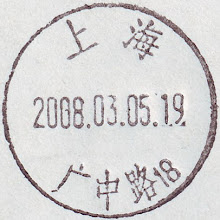
5 | 03.05 | 1 | ||
6 | 03.24 | 2 | ||
7 | 06.06 | 2 | Joint issue with India | |
8 | 04.12 | 2 | ||
9 | 04.13 | 2 | ||
10 | 05.10 | 6+1S/S | ||
11 | 04.16 | 2 | ||
12 | 04.30 | 2 | ||
T7 | 05.20 | 1 | Semipostal stamp | |
13 | 06.01 | 2 | ||
14 | 06.18 | 4 | ||
15 | 06.25 | 2 | ||
16 | 07.06 | 4 | ||
17 | 07.19 | 2 | ||
18 | 08.08 | 1 | ||
19 | Celebrating the Opening of Olympex, the Olympic Expo Beijing 2008 | 08.08 | 2+1S/S | |
20 | 08.24 | 4 | Joint issue with UK, Sheetlet II | |
21 | The 50th Anniversary for the Founding of Chinese Television Industry and CCTV | 09.02 | 1 | |
22 | 09.06 | 2 | ||
23 | The 50th Anniversary of University of Science and Technology of China | 09.20 | 1 | |
24 | The 50th Anniversary of the Founding of Ningxia Autonomous Region | 09.23 | 3 | |
25 | 09.28 | 3 | ||
26 | The 50th Anniversary of the Guangxi Zhuang Autonomous Region | 10.18 | 3 | |
27 | 10.24 | 1 | ||
28 | 12.18 | 1+1S/S | ||
- | Power Grid Construction | 3 | cancelled | |
- | Foreign Musicians (Bach, Haydn, Mozart, Beethoven) | 4 | cancelled | |
- | 2 | cancelled | ||
- | The Origin of Three Rivers | 3 | cancelled |
2008 China Postal Stationeries
Number | Name | Date |
JF89 | The 60th Anniversary of the Revolutionary Committee of the Chinese Kuomintang (RCCK) | 01.01 |
JF90 | International Forum on Climate Change and Science & Technology Innovation | 04.24 |
JP147 | 06.10 | |
JP148 | 06.29 | |
JP149 | The 130th Anniversary of the Issuance of the Large Dragon Stamps | 07.24 |
JP150 | 08.01 | |
JP151 | 09.19 | |
JP152 | 10.28 | |
| TP34 | 06.27 | |
TP35 | 07.27 | |
TP36 | Huxian Farmer Paintings | 09.28 |
TP37 | 11.10 |
2008 China Stamps & Postal Stationeries Catalogue
2009 China Stamps & Postal Stationeries Catalogue
2010 China Stamps Issue Plan
0
Comments
Label:
2008 Olympic Games,
China
Thailand Flowers M/S FDC
 Thailand Minisheet FDC
Name: New Year 2008
Issue date: 2007 November 15th
Number: 831
There is an Autograph of Stamps Designer (Mrs. Veena Chantanatat) on this FDC.
Official FDC of this set
0
Comments
Label:
Thailand
Tuesday, November 20, 2007
Thailand Flowers FDC
 Thailand FDC
Name: New Year 2008
Issue date: 2007 November 15th
Number: 831
Purpose:
To be affixed on New Year greeting cards.
Design:
Illustrate Plumeria rubra L. and Plumeria obtusa L.
Plumeria (common name Frangipani; syn. Himatanthus Willd. ex Roem. & Schult.) is a small genus of 7-8 species native to tropical and subtropical Americas. The genus consists of mainly deciduous shrubs and trees. P. rubra (Common Frangipani, Red Frangipani), native to Mexico, Central America, and Venezuela, produces flowers ranging from yellow to pink depending on form or cultivar. From Mexico and Central America, Plumeria has spread to all tropical areas of the world, especially Hawaii, where it grows so abundantly that many people think that it is indigenous there.
They are now common naturalised plants in southern and southeastern Asia, and in local folk beliefs provide shelter to ghosts and demons. The scent of the Plumeria has been associated with a vampire in Malay folklore, the pontianak. They are associated with temples in both Hindu and Buddhist cultures, though Hindus do not use the flowers in their temple offerings. More...
Minisheet FDC of this set
0
Comments
Label:
Thailand
Monday, November 19, 2007
Lithuania Christmas FDC
 Lithuania FDC
Name: Holy Christmas and New Year
Date of Issue: 10 November 2007
Design:
1,35 Lt: Winter Holidays
2,45 Lt: The World greets New Year
2009 Christmas FDCs:
Estonia, Israel, Lithuania.
2008 Christmas FDCs:
Canada: The Nativity, Canada: Winter Fun, Estonia, Italy, Lithuania.
2007 Christmas FDCs:
Estonia, Finland, Hong Kong, Japan, Lithuania, Ukraine, Vatican.
0
Comments
Label:
Lithuania
Philippines Scouting FDC
 Philippines FDC
Name: 100 Years of Scouting
Date of Issue: 01 Augest 2007
Scouting, also known as the Scout Movement, is a worldwide youth movement with the stated aim of supporting young people in their physical, mental and spiritual development, so that they may play constructive roles in society.
Scouting began in 1907 when Robert Baden-Powell, Lieutenant General in the British Army, held the first Scouting encampment at Brownsea Island in England. Baden-Powell wrote the principles of Scouting in Scouting for Boys (London, 1908), based on his earlier military books, with influence and support of Seton of the Woodcraft Indians, Smith of the Boys' Brigade, and his publisher Pearson. During the first half of the 20th century, the movement grew to encompass three major age groups each for boys (Cub Scout, Boy Scout, Rover Scout) and, in 1910, a new organization, Girl Guides, was created for girls (Brownie Guide, Girl Guide and Girl Scout, Ranger Guide). More...
2008 Malaysia Scouting FDC
2007 Argentina Scouting FDC
2007 Philippines Scouting FDC
2007 Taiwan Scouting FDC
0
Comments
Label:
Philippines
Sunday, November 18, 2007
Thailand Ministry of Defence FDC
 Thailand FDC
Name: 120th Anniversary of the Ministry of Defence
Issue date: 2007 November 11th
Number: 830
Purpose:
To commemorate the 120th anniversary of the Ministry of Defence.
Design:
Illustrate the royal portraits of Their Majesties King Chulalongkorn (King Rama V) and King Bhumibol Adulyadej (King Rama IX) with the Ministry of Defence building and the emblem in the background.
Thailand's military affairs came into existence at the same time when the kingdom of Thailand was established. They have subsequently developed from Sukhothai period through Rattanakosin era. In the reign of King Rama the fifth,our great beloved King systemized the thai military for the purposes of defending the country, maintaining Thailand's freedom, integrity and sovereignty and keeping abreast with civilized countries. The King brought the army and the navy under the command of his royal highness prince (Mahavajirunahidh) the crown prince. On april 8,1887, the King issued a decree to establish the war department, during that period, the thai military affairs were extensively developed and modernized in pursuit of those of civilized countries. Later on, april 1,1890, the war department was upgraded to the war ministry with the army and the navy under its command. In the reign of King Rama the sixth, the war ministry was changed into the ministry of defence. It's responsibility was only for the army as the navy was separated to become the navy ministry after world war I, the navy ministry was joined to the ministry of defence on november 8,1931 and the air force was established on april 9, 1937. Since then there have been three armed services in the ministry of defence. Namely army, navy and air force.
The thai armed forces have been continuously developed to be as advanced as those in civilized countries. There are some major changes in organizational structures,education, training, operations and others in order to implement authority and responsibility as specified in the present constitution of the Kingdom of Thailand. Article 72 of the constitution states that the state is required to provide military forces in order to protect it's independence, stability, the monarchy, national interests, democracy with constitutional monarchy and to develop the country.
In 1960, the role and the duty of the ministry of defence were defined in article 4 of the ministry of defence act. The article states that the ministry of defence has authority and duty in defending and maintaining the stability of the Kingdom from external and internal threats. The military force is established to protect the monarchy, to fight the rebels and the riots, to develop the country and to protect the national interests as defined by law.
Website of the Thailand Ministry of Defence
0
Comments
Label:
Thailand
Saturday, November 17, 2007
Russia Horse Breeds FDC
 Russia FDC
Name: The Native Horse Breeds
Issue date: 2007 November 7th
Design:
6.00: Vladimir Heavy Draft (Владимирская порода)
This breed was developed in Ivanovo and Vladimir regions on the basis of large native horses through crossbreeding with various draft breeds, such as the Percheron and the Suffolk, and later with the Clydesdale and, to a lesser extent, with the Shire. The latter was in wide use only from 1919 through 1929. The aim was a horse of medium draft power or less which would have rather high speed. In the formation of the breed, a particular role was played for more than a hundred years by Gavrilovo-Posad breeding station, previously a stud farm and a state breeding stable. Its experts invested no small effort in the creation of horses of uniform type in the region. In 1946 the new heavy draft breed was recognized.
The features of the conformation are: a long clean-cut head with the profile often arched; elongated and well-muscled neck; sufficiently pronounced and long withers; back somewhat long, a little dipped; short and broad loin; long moderately sloping croup; long legs, clean properly set. the chest is broad but not deep and the ribs are insufficiently sprung. The hair of the mane, tail and limbs is well developed. The Vladimir have excellent gaits. The predominant color is bay; brown and black are less frequent. There are characteristic markings on the head (a star or blaze) and legs. More...
7.00: Orlov Trotter (Орловская рысистая порода)
The Orlov Trotter was developed by A.G. Orlov at Khrenov stud beginning sometime between 1775 and 1784. The first date is that of the establishment of the Khrenov stud while the latter is that of the birth of Bars I, the progenitor of the modern pedigree Orlov. Arabian horses were crossed with the Dutch, Danish and Mecklenburg harness breeds. The Orlov evolved under the natural conditions of Voroezh region, characteristic of central Russia, and used natural pastures in the flood plain of the Bityug river. The combination of stable and pastures produced a breed with good action and adaptability to various management conditions. It thus became possible to spread the breed beyond the limits of Voronezh region to different climatic zones of the country, from Poltava to Perm regions, from Pskov to Kurgan regions and from Kirgizia to Altai territory. The Orlov is also taken to the mountain regions east of Lake Baikal as the principal improver of the native breeds. More...
7.00: Vyatka (Вятская порода)
The Vyatka belongs to the North Russian Pony group. Its development was strongly influenced by the natural conditions in the territories of what are now Kriov and western Perm regions and in Udmurtia.
The Vyatka's features are a clean-cut head, a wide forehead and broad jaws. The neck is short and fleshy, often well-arched; the withers are average in size; the back is broad, long and sometimes slightly dipped at the withers; the croup is wide and on the short side; the trunk is wide and deep; the legs are short and solid and have good hoofs; the hind legs are often sickle-hocked. The forelock, mane and tail are thick and long. A characteristic feature of the breed is its chestnut-roan or bay-roan color with black stripe along the spine and wing-shaped pattern over the shoulders, as well as zebra stripes on the forelegs. However, the color can also be brown, bay, chestnut or rarely, black. The average measurements (in cm) of modern Vyatka mares are: height at withers 140, oblique body length 150, chest girth 172, and cannon bone girth 18.9. The live weight is 400 kg. More...
8.00: Russian Don (Донская порода)
The Russian Don Horse serves superbly both in harness and under saddle. This breed was the mount of the famed and feared Cossack Cavalry. It was the Cossack's skill at breeding that made the Don such a rugged horse. The breed originated in the area near the Don and Volga Rivers in the southern Soviet Union. Originally, this was a small horse, but during the 1800's large numbers of the Persian Arabs and Karabakh breeds were bred to the Don. The result was a larger, more refined horse, which combined the durability of the older type and the more pleasing conformation of the imported stock. Traditionally, the Don has roamed in herds, enduring harsh winters with little food and only the heartiest have survived.
The Don Horse has a refined head with a straight or sometimes hooked nose, large nostrils, and expressive eyes. The neck is lean and often straight. The withers are not prominent; the shoulders are quite straight, giving the Don a rather short stride. Its chest is substantial and muscular. The back is long and the legs are clean. The Don stands between 15.1 and 16 hands and appears in varying solid colors such as chestnut, bay, and gray. The breed is noted for an even temperament and great powers of endurance. More...
2007 Malaysia Horse Show FDC
2007 Russia Horse Breeds FDC
2007 Russia Horse Breeds Minisheet FDC
0
Comments
Label:
Russia
Friday, November 16, 2007
Taiwan Outdoor Activities FDC
 Taiwan FDC
Name: Outdoor Activities (Issue of 2007)
Issue date: 2007 November 9th
Number: Sp. 511
Design:
(1) Speed Walking (NT$5.00):
Speed walking is walking with a longer stride and faster pace. It is suitable to all age groups, can be done anytime and anywhere. There is little risk of injury. It is a form of exercise that is convenient and affordable.
(2) Cycling (NT$5.00):
Cycling is suited to all age groups, and is environmental and fashionable. Bike paths have been built across the nation. A combination of exercise and leisure, cycling is very popular.
(3) Skateboarding (NT$12.00):
Skateboarding is a sport popular among young people, for it requires speed, technique and a willingness to challenge oneself. The cool designs of the boards also appeal to youth.
(4) Inline Skating (NT$25.00):
It is called an inline skate because the wheels are arranged in a single line. Inline skating is a challenging sport, and is great at enhancing the skater’s sense of balance and coordination. It is a cool sport in the eyes of teens.
0
Comments
Label:
Taiwan
Thursday, November 15, 2007
Finland Woodwork FDC
 Finland FDC
Name: Fine Woodwork (Finland - Hong Kong, China Joint issue)
Issue date: 2007 November 2nd
Design:
0,70 € (left): Zitan Armchair with Dragon Design, Qing Dynasty
The Qing Dynasty chair shown on the stamp was made of the now extinct zitan hardwood tree.
0,70 € (right): Oval Bowls of the 2000s
The Finnish stamp shows six curly birch bowls made by Markku Kosonen in which the brown, almost floral grain of the wood is brought out beautifully.
0
Comments
Label:
Finland,
Joint Issue



 Posts


