China Stamps
Name: Beijing - Hangzhou Grand Canal (京杭大运河)
Number: 2009-23
Date of Issue: 26 September 2009
Value: 6 stamps/set
Denominations:
1.20元 (6-1): Lantern Lighting Pagoda (燃灯塔)
With a total length of 1,794 kilometers, the Beijing - Hangzhou Grand Canal is divided into seven sections, namely Tonghui River, North Canal, South Canal, Lu Canal, Central Canal, Inner Canal, and Jiangnan Canal. Its nearly 1,000 years of history left behind numerous architectural and cultural legacies. The Lantern Lighting Pagoda, one of the "Four Famous Pagodas along the Grand Canal", located in the Tongzhou District of Beijing, is a 13-storied thick-eave brick structure dating to the Liao Dynasty (907 - 1125). Featuring a total of 2,248 copper bells hung from the protruding eves, it is one of the ancient pagodas with the greatest number of wind bells in China. The Pagoda is considered a landmark structure at the northern end of the Grand Canal.
1.20元 (6-2): Palace of the Goddess of the Sea (天后宫)
The Beijing - Hangzhou Grand Canal stretches a long way across lakes and rivers. For the sake of safe shipping, various gods are enshrined and worshipped along the course, as exemplified by the Palace of the Goddess of the Sea at the junction of the North Canal, the South Canal and the Haihe River in Tianjin. Constructed during the Yuan Dynasty and covering a floor space of 2,500 square meters, the palace complex enshrines the Goddess of the Sea (Matsu). The existing main entrance, a memorial archway, Drum Tower, Bell Tower, Front Hall, Main Hall, Sutra Library, and Qisheng Hall within the compound are older structures in the urban district of Tianjin. A pair of 26-meter-high flag masts tower in front of the gate, witnessing the city's history of oceanic and riverine shipping.
1.20元 (6-3): Shanxi-Shaanxi Guild Hall (山陕会馆)
A "Mother River" meandering for thousands of years, the Beijing - Hangzhou Grand Canal has nurtured dozens of riverine cities and greatly increased the economic and cultural exchanges between China's northern and southern regions. Historically, merchants from different parts of the country traveled along the canal to do business in different cities; hence emerged associations of merchants from the same region. The Shanxi-Shaanxi Guild Hall, situated on the west bank of the Dongguan Section of the Canal in Liaocheng, was first constructed in 1743, the eighth year of the reign of Qing Emperor Qianlong, and was reconstructed several times to eventually form the present scale. Built with a fund collected by Shanxi and Shaanxi merchants for "worshipping gods and uniting compatriots", the architectural complex integrates temple with guild hall. The main hall enshrines Guan Yu, the god of loyalty and wealth.
1.20元 (6-4): Qingjiang Water Gate (清江闸)
The Grand Canal, starting in Beijing and ending in Hangzhou, strings together the Haihe, Huanghe (Yellow), Huaihe, Changjiang (Yangtze), and Qiantang Rivers at different sections with water gates. In 1415, to control floods, Ming-Dynasty Water Transport Minister Chen Xuan constructed four water gates at Xinzhuang, Fuxing, Qingjiang and Yifeng in Huai'an, Jiangsu Province. Of those, the Qingjiang Water Gate was later reconstructed and reinforced to reach seven meters in width. In every season for grain transport, the long row of boats loaded with grain to pass the gate would stretch several miles. Despite a passage of 600 years, the well-preserved Qingjiang Water Gate now still stands in an imposing manner on the Grand Canal.
1.20元 (6-5): Wenfeng Pagoda (文峰塔)
Snaking from north to south on vast Chinese land, the Beijing - Hangzhou Grand Canal varies in name and flow direction from section to section, and behind each of its sections are intriguing tales. The Yangzhou Section of the ancient water course stretches 30 kilometers from Guazhou to Wantou and embraces the renowned "Yangzhou Three Bends". It is in this section that Wenfeng Pagoda, one of the "Four Famous Pagodas along the Grand Canal", towers. A 40-meter-high brick structure dating to the reign of Emperor Wanli of the Ming Dynasty (1368 - 1644), Wenfeng Pagoda is considered the symbol of Yangzhou to the boats entering the city from south via the canal. It is said that during the Tang-Dynasty Emperor Tianbao's reign (742 - 756), eminent monk Jian Zhen at Yangzhou's Daming Temple sailed out from Sanwan Dock at the location of Wenfeng Pagoda eastward to Japan, and finally succeeded after several failed journeys.
1.20元 (6-6): Gongchen Bridge (拱宸桥)
The majestic Grand Canal flows from Beijing to Hangzhou, and from the Yuan Dynasty (1206 - 1368) to present 21st Century. The Gongchen Bridge, in Hangzhou City, is a three-arch stone bridge dating to the Ming Dynasty. Having been damaged and then reconstructed several times historically, it is still in service today. The highest and longest ancient stone arch bridge in Hangzhou, it is considered the landmark symbol of the southern end of the Grand Canal. Passing the bridge, boats can either stop at Wulinmen Dock for an entry into the beautiful city of Hangzhou, or continue the journey into the Qiantang River and finally enter East China Sea. In ancient times, the bridge represented homage to the feudal emperors, while today it extends warm welcome to visitors from China and abroad.
Wednesday, October 7, 2009
China Stamps: 2009-23
 0
Comments
Label:
China
Monday, September 21, 2009
China Stamps: 2009-22
 China Stamps
Name: 60th Anniversary of the CPPCC (中国人民政治协商会议成立六十周年)
Number: 2009-22
Date of Issue: 21 September 2009
Value: 2 stamps/set
Denominations:
1.20元 (2-1): Emblem of the Chinese People's Political Consultative Conference (中国人民政治协商会议会徽)
1.20元 (2-2): Hall of the Chinese People's Political Consultative Conference (全国政协礼堂)
September 21, 2009 marks the 60th anniversary of the CPPCC (Chinese People's Political Consultative Conference). Over the past six decades, under the leadership of the first three generations of central collective leadership of the Communist Party of China (CPC), with Mao Zedong, Deng Xiaoping and Jiang Zemin at the core, respectively, and the leadership of the present CPC Central Committee with Hu Jintao as general secretary, the CPPCC has grown into a political organization composed of representatives from all the eight democratic parties, personages without party affiliation, mass organizations, all the 56 ethnic groups, five religions, totalling 34 different circles. As a Chinese people's patriotic united front organization, an important institution of multiparty cooperation and political consultation led by the CPC, and an important way to promote socialist democracy in China's political activities, the CPPCC has made significant contributions to the nation's prosperity, people's happiness, and China's national reunification and foreign exchange.
0
Comments
Label:
China
Sunday, September 20, 2009
Singapore Sports FDC
 Singapore FDC
Name: Countdown to the Singapore 2010 Youth Olympic Games
Date of Issue: 14 August 2009
On 21 February 2008, Singapore celebrated with fanfare when the International Olympic Committee announced its decision to hold the inaugural Summer Youth Olympic Games in 2010 in Singapore. Preparations for Singapore 2010 are on track, with progress in the development of an integrated sport, culture and education programme. To commemorate the countdown to this international multi-sport event on 14 August 2009, this set of stamps portrays the warm welcome from the host city (65C), and how Singapore 2010 aims to inspire youths to embrace, embody and express the Olympic values of Excellence (Ist local). Friendship ($ 1.10) and Respect ($ 2.00).
About Singapore 2010 Youth Olympic Games:
Singapore will be hosting the first Youth Olympic Games (YOG) from1 4 to 26 August 2010. It will receive some 5000 athletes and officials from the 205 National Olympic Committees (NOCs), along with estimated800 media representatives, 20,000 local and international volunteers, and more than 500,000 spectators. Young athletes - aged between14 and 18 years - will compete in 26 sports and take part in the Culture and Education Programme.
The Singapore 2010 Youth Olympic Games will create a tasting sports, culture and education legacy for Singapore and youths from around the world, as well as enhance and elevate the sporting culture locally and regionally.
Singapore 2010 Youth Olympic Games Series:
2008 Youth Olympic Games
2009 Countdown to the Singapore 2010 Youth Olympic Games
0
Comments
Label:
Singapore
Saturday, September 19, 2009
Singapore Sculptures S/S FDC
 Singapore Souvenir Sheet FDC
Name: Sculptures
Date of Issue: 09 August 2009
The art of sculpture has always proved to be a challenge in the arts arena, with sculptors needing ample space to work in and to store the finished pieces. However, thanks to the dedication of Ms Han Sai Por, Mr Tay Chee Toh, Mr Teo Eng Seng, Mr Wee Beng Chong, the late Mr Anthony Poon, the late Brother Joseph McNally, and the late Dr Ng Eng Teng, the art of sculpture is still very much alive and flourishing in Singapore today. Centering on the theme of Sculptures, this year's National Day stamp issue will see works such as the Standing Figure by Mr Wee Beng Chong, Wealth by the late Dr Ng Eng Teng, Nude 2 by Mr Tay Chee Toh, We're Happy. Are Your Happy: by Mr Teo Eng Seng, Aspirations by the late Mr Anthony Poon, Art Trees by Ms Han Sai Por and Signature by the late Brother Joseph McNally, be featured.
0
Comments
Label:
Singapore
Friday, September 18, 2009
Singapore Sculptures FDC
 Singapore FDC
Name: Sculptures
Date of Issue: 09 August 2009
Denominations:
50c: Mr Wee Beng Chong
Wee Beng Chong is a painter, sculptor, print-maker, calligrapher and seal-carver. On his ability to move between traditions, he believes that there is no clear boundary between eastern and western art and being an artist, one must also infuse our work with our traditional values and cultural heritage. He was awarded the Cultural Medallion in 1979.
50c: Dr Ng Eng Teng
The late Dr Ng Eng Teng aimed to express humanist themes in his works and felt that the human figure best expresses feelings and ideas because it is closest to us. His works are reflections of his thought and experiences in visual form. Dr Ng passed away on November 4, 2001 and was awarded the Cultural Medallion in 1981.
50c: Mr Tay Chee Toh
Tay Chee Toh, a painter and sculptor took paths in varied media and modes of visual expression. His sculptural artworks of welded steel, expressed in sensuous curvilinear forms, refer to the artist's allusion to the figure. Yet the lines of the organic abstract forms in their clean arabesque echo the postures and contortions of his two-dimensional figures. He was awarded the Cultural Medallion in 1985.
50c: Mr Teo Eng Seng
Teo Eng Seng, being sensitive to his environment has been his impetus for creating works and striding out in fresh directions. While his career is closely associated with paperdysculpt, he continues to search out and experiment-ing with new materials including plastic wastes and fibreglass for sculptural works and installations. He was awarded the Cultural Medallion in 1986.
50c: Mr Anthony Poon
The late Anthony Poon's works of pure abstraction shy from statement-making and emotive imagery. They stand as self-referential pure form, demanding attention to their physical presence and materiality. His penchant for making large works manifested itself in public commissions of large-scale relief and sculptural works for indoor and outdoor spaces. He passed away on September 2, 2006 and was awarded the Cultural Medallion in 1990.
50c: Ms Han Sai Por
Han Sai Por has made a name as a stone sculptor. With nature as the source of inspiration and reference comes with strongly held views that modernity has severed ties with nature, her sculptures are intended to be evocative while she is most concern about the subject and idea she wanted to deliver. She was awarded the Cultural Medallion in 1995.
50c: Brother Joseph McNally
The late Brother Joseph McNally is a prolific sculptor whose work consists of salvaging discarded wood to make sculpture assemblages of glass and bronzes. While evoking a spiritual “world vision”, his works also fused elements of his Irish heritage and the diversity of Asian cultures he grew to learn while spending most part of his life being an influential art educator and artist in Singapore. He passed away on 27 August 2002 and was awarded the Singapore National Day Meritorious Service Medal in 1997.
0
Comments
Label:
Singapore
Thursday, September 17, 2009
China Stamp: 2009-21
 China Stamp
Name: 100th Anniversary of Lanzhou University (兰州大学建校一百周年)
Number: 2009-21
Date of Issue: 17 September 2009
Value: 1 stamp/set
Lanzhou University, founded in 1909, (SC: 兰州大学, TC: 蘭州大學, PY: Lánzhōu Dàxué) is a university located in Lanzhou, Gansu Province, China. It provides programs for undergraduate, graduate students on four campuses--three in Lanzhou city centre and one in Yuzhong (榆中), which is about 30 miles away from the main campus. Total enrollment is approximately 20,000. Undergraduate students study at the Yuzhong campus. More...
0
Comments
Label:
China
Wednesday, September 16, 2009
Lithuania Railway FDC
 Lithuania FDC
Name: 150th Anniversary of Railway in Lithuania
Date of Issue: 08 August 2009
Denomination:
2,90Lt: The Steam Locomotive 0-3-0 and The Electric Train EJ575
In February of 1851 the government of tsarist Russia made a decision to build a railway line St.Petersburg–Warsaw, which in the territory of Lithuania had to stretch through Dūkštas, Ignalina, Vilnius, Lentvaris with the branch through Kaunas to Kybartai (Virbalis) also reaching the border of Prussia.
The works for railway line Daugpilis–Vilnius–Lentvaris–Kaunas–Kybartai (Virbalis) were started on 1 May 1859, and already on 4 September 1860 the first locomotive arrived to Vilnius from Daugpilis.
Traffic of trains by railway St. Petersburg–Kybartai (Virbalis) was opened on 15 March 1862, and on 15 December regular traffic to Warsaw started. The trip from St. Petersburg to Vilnius lasted almost 19 hours, from Vilnius to Kaunas – 2 hours 33 minutes.
The first vehicles for the railway St.Petersburg–Warsaw were bought in Austria, Belgium, United Kingdom and France.
While building the firs railway line St.Petersburg–Warsaw in XIX century the first train stations were built (21 station): premium class stations in Kybartai (Virbalis) and Lentvaris, first class stations in Vilnius and Kaunas.
0
Comments
Label:
Lithuania
Tuesday, September 15, 2009
USA Forever FDC
 USA FDC
Name: Forever - Liberty Bell (2009 Edition)
Date of Issue: 07 August 2009
In 2007, the U.S. Postal Service issued the Forever stamp, which will always be valid as First-Class postage on standard envelopes weighing one ounce or less, regardless of any subsequent increases in the First-Class rate. The stamp art depicts the Liberty Bell, which is perhaps the most prominent and recognizable symbol associated with American independence. Over the years, the historic significance of the bell's message has transcended our national borders, and today the Liberty Bell is an international icon of freedom. Replicas of the Liberty Bell exist in all fifty states and the District of Columbia.
Comment: If you check the colors of two stamps carefully, you can find these are two varieties. Yes, Please check the year-date 2009 carefully, The copper one is printed by Ashton Potter and the black one is printed by Avery Dennison.
0
Comments
Label:
USA
Monday, September 14, 2009
Russia Symbol FDC
 Russia FDC
Name: The Historical Character of St. Petersburg - Ship on the Spire of the Admiralty
Date of Issue: 06 August 2009
Admiralty - one of the masterpieces of architecture of St. Petersburg, a monument of Russian classicism. Ship on its spire is one of the symbols of the city along with the Bronze Horseman and the Palace Bridge.
It is believed that the prototype ship became the first Russian ship - a frigate "Eagle", which was built by Tsar Alexei Mikhailovich in 1667-1669 gg.
0
Comments
Label:
Russia
Sunday, September 13, 2009
China Stamps: 2009-20


Name: 300 Tang Poems (唐诗三百首)
Number: 2009-20
Date of Issue: 13 September 2009
Value: 6 stamps/set
Denominations:
1.20元 (6-1): Downstream to Jiangling, Li Bai (下江陵 - 李白)
1.20元 (6-2): A View of Taishan, Du Fu (望岳 - 杜甫)
1.20元 (6-3): Song of a Pipa Player, Bai Juyi (琵琶行 - 白居易)
1.20元 (6-4): Untitled, Li Shangyin (无题 - 李商隐)
1.50元 (6-5): Looking at the Moon and Thinking of One Far Away, Zhang Jiuling (望月怀远 - 张九龄)
3元 (6-6): Ascending the Stork Tower, Wang Zhihuan (登鹳雀楼 - 王之涣)
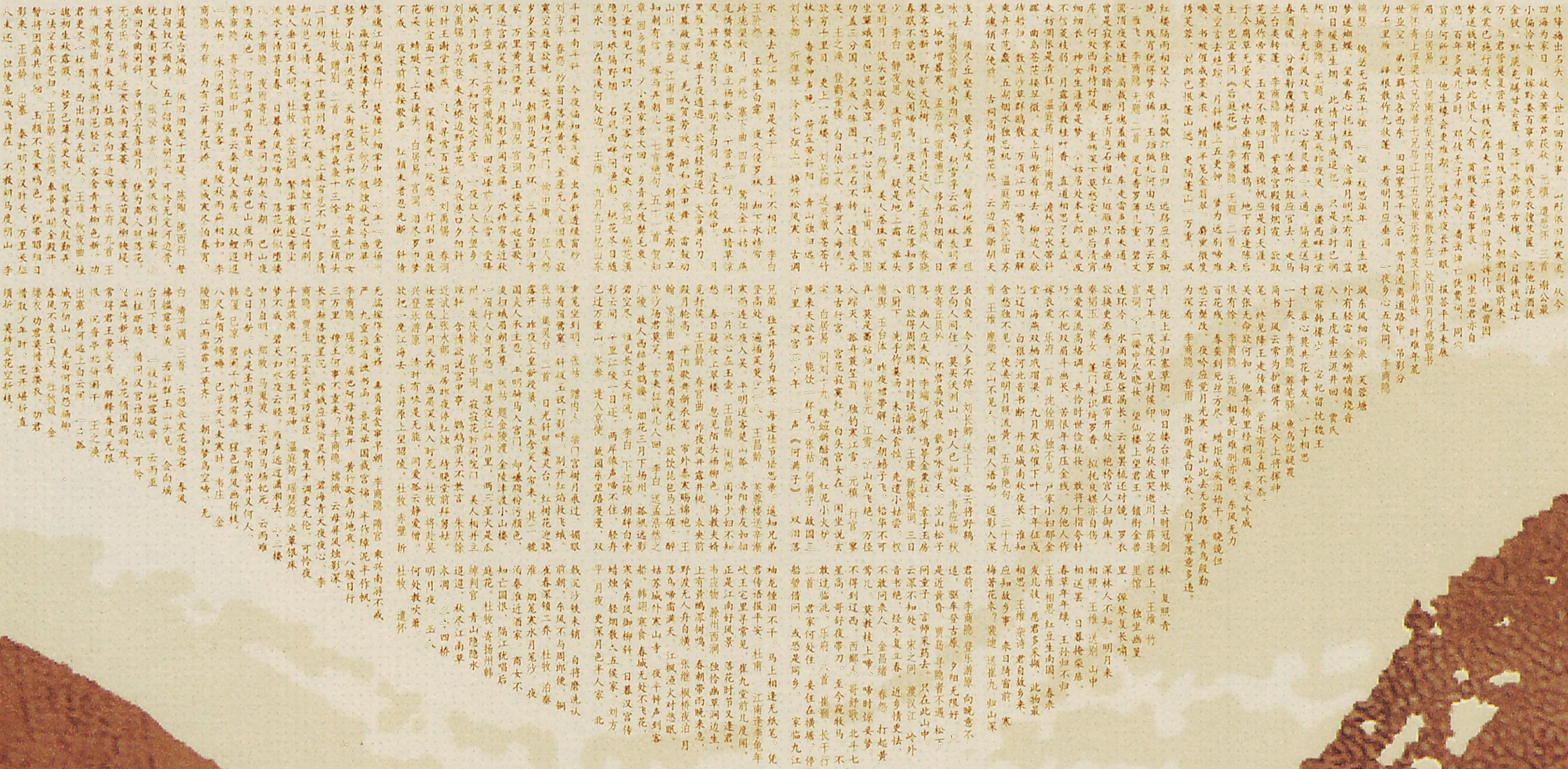
The Tang Dynasty (618 - 907), considered the golden age of classical Chinese poetry, produced a galaxy of prominent poets in a variety of genres. The creations of Li Bai, Du Fu, Wang Wei and Bai Juyi represent the best of Chinese classical poetic forms. The profound and meaningful poems of the prime Tang period took the Tang poetry to its zenith. Compiled by Sun Zhu of the Qing Dynasty (1644 - 1911), the "300 Tang Poems", a selection of 310 poems, mostly of the prime Tang period, embodies different characteristics and styles of different stages of the Tang. Since its publication during the reign of Emperor Qianlong (1736 - 1795), it has remained the widest-spread and most influential collection of Tang poems.
Comment: This is an excellent set in China stamps history. It has many special effects on this sheet. 1. This sheet contains all of content of the 300 Tang Poems, totally 25,000 Chinese characters, they were micro-printed on this sheet, every Chinese character is only 0.4mm in height; 2. If you use a special talk-pen to click the micro-printed section, you will hear the reading of every poem (I don't know whether it is the first multi-media stamps in the world? Who knows?); 3. The moon on 6-5 stamp used the phosphorescence technology; 4. Some parts of this sheet used the sandalwood smell.
Part 1; Part 2; Part 3; Part 4; Part 5; Part 6; Part 7.
0
Comments
Label:
China
Saturday, September 12, 2009
China Pre-stamped Envelope: JF92

 China Pre-stamped Envelope
Name: Opening of China Post Life Insurance Company Limited
Number: JF92
Date of Issue: 09 September 2009
China Post Life Insurance Company Limited is a state-owned national life insurance company initiated by China Post Group and 20 Post Corporations at provincial, autonomous region and municipal levels. It opened its doors for business on September 9, 2009.
Fully relying on the current network and recourses of Post, China Post Life regards the "service to grass-roots and service to agriculture, rural areas and farmers" as its duty, insists on the principle of operation with specialized and distinctive features, and implements the development strategy of "low cost, wide coverage, high yield". It focuses on balancing the insurance industry development between urban and rural areas by starting with the micro-insurance, and does the utmost to create a popular new-style efficient commercial insurance company that satisfying the government and reassures the regulator with its modernized system and standardized management.
0
Comments
Label:
China
Friday, September 11, 2009
Russia Symbol FDC
 Russia FDC
Name: The Symbol of Moscow - St. George the Victorious
Date of Issue: 06 August 2009
Since the time of Dmitry Donskoy St. George is the patron saint of Moscow. From the late XIV-XV centuries. in Moscow heraldry constantly at a picture of a rider spearing a serpent. In the popular mind he was perceived as an image of St. George, and in 1730 it was formalized.
Description of The Symbol of Moscow
Coat of arms of Moscow is an image on a dark red heraldic shield with the ratio of width to height of 8:9-scale to the right of the viewer rider - St. George the Victorious in silver armor and a blue mantle (cloak), a silver horse, striking a golden spear black serpent.
0
Comments
Label:
Russia
Thursday, September 10, 2009
USA Flags FDCs
USA FDCs
Name: Flags of Our Nation (3rd Series)
Date of Issue: 06 August 2009 Kentucky
This is a navy blue flag with the state seal in the middle; the seal shows two friends with the words "United We Stand" above them and "Divided We Fall" below them. Snapshot art features horses and the state's Bluegrass region.
Stars and Stripes
The 13 horizontal stripes represent the 13 original colonies; the 50 stars represent the 50 states. Snapshot art depicts the "amber waves of grain" of "America the Beautiful," by Katharine Lee Bates. Maine
The coat of arms on the Maine flag includes a "husbandman, resting on a scythe" and a "seaman, resting on an anchor" on either side of a shield featuring a moose and a pine tree. Snapshot art also includes a moose.
Louisiana
The state coat of arms at the center of the flag depicts the state bird, a pelican, feeding its young. Snapshot art shows brown pelicans in flight. Massachusetts
The flag holds the state coat of arms, which features a Native American holding a bow in his right hand and an arrow in his left hand; the arrow points downward as a symbol of peace. Snapshot art shows seabirds in flight, with sailboats in the background.
Maryland
The colors and patterns on this state flag are from the coats of arms of two of Maryland's founding families: the Calverts (yellow and black) and the Crosslands (red and white). Snapshot art shows a red-winged blackbird in a cattail marsh. Minnesota
The flag design incorporates the state seal, state flower, state name, and important dates in state history. Snapshot art features a grain elevator on a riverbank with swans in the foreground.
Michigan
At the center of the flag is the state coat of arms; the word "TUEBOR" can be translated as "I will defend." Snapshot art shows vessels commonly seen on the Great Lakes. Missouri
The flag has three broad horizontal stripes of red, white, and blue; centered on the white stripe is the state coat of arms, surrounded by a blue band containing 24 stars. Snapshot art features a paddle wheeler on a river.
Mississippi
In the flag's red union is "a broad blue diagonal cross" emblazoned with 13 stars and bordered with white; the field has three bars of blue, white, and red. Snapshot art shows black bears in a wooded area.
0
Comments
Label:
USA
Wednesday, September 9, 2009
China Stamps: 2009-19
 China Stamps
Name: National Library of China (国家图书馆)
Number: 2009-19
Date of Issue: 09 September 2009
Value: 2 stamps/set
Denominations:
1.20元 (2-1): Ancient Books Library (古籍馆)
1.20元 (2-2): North Section of the Headquarters (总馆北区)
The predecessor of the National Library of China was the Beijing Library established in 1909. Today, the library, consisting of its headquarters north of Beijing's Zizhuyuan Park and the Ancient Books Library west to Beihai Park, is a national repository of the home publications, a national bibliographic center, and a national center of ancient books protection. Thanks to a century of cultural deposit, the National Library serves as a systematic national cultural treasury housing a great number of precious ancient books, represented by the Wenjin Chamber copy of Complete Collection of the Four Treasuries and Yongle Encyclopedia. It has made a great contribution to the promotion of the Chinese civilization. With distinctive reading and exhibition halls, state-of-the-art facilities, a wide collection of books, and diverse services, the National Library is now one of the largest and most modern-equipped libraries in the world.
0
Comments
Label:
China
Tuesday, September 8, 2009
Algeria Road Safety FDC
 Algeria FDC
Name: Road Safety
Date of Issue: 05 August 2009
The development of the auto industry promotes the movement of people and their journey, however, the result of growth in the number of vehicles in adverse consequences, primarily the growing number of tragic accidents Traffic that generate hundreds of thousands of casualties and millions of wounded, Algeria is not spared from this scourge.
Thus, the year 2008 saw 40,481 injury accidents in 4422 resulting in road traffic deaths and 64,708 injuries of different levels of severity, this is compounded by other economic losses estimated at 100 billion dinars for the year 2007.
No one can deny the efforts of all stakeholders in road safety through a national policy based primarily on the human factor, first through its education, its development and effective training for it becomes a perfect conductor that respects the foundations of security and traffic on the other hand, the introduction of modern education methods and instruments requiring compliance with the law and repression 'against all those who commit offenses.
Despite the importance attached 'to this factor, we must not neglect the motor factor and the environment by applying periodic inspection for all vehicles.
Regarding the improvement of the environment, several studies have been initiated, such as the development of road network equipped with safety means for ensuring the smooth flow of traffic and solve the problem of congestion.
Continuous efforts should be commonly provided by all agencies and sectors in order to mitigate as much as possible the social tragedy, or even stop the economic bleeding resulting from the misuse of the vehicle in our country.
0
Comments
Label:
Algeria



 Posts